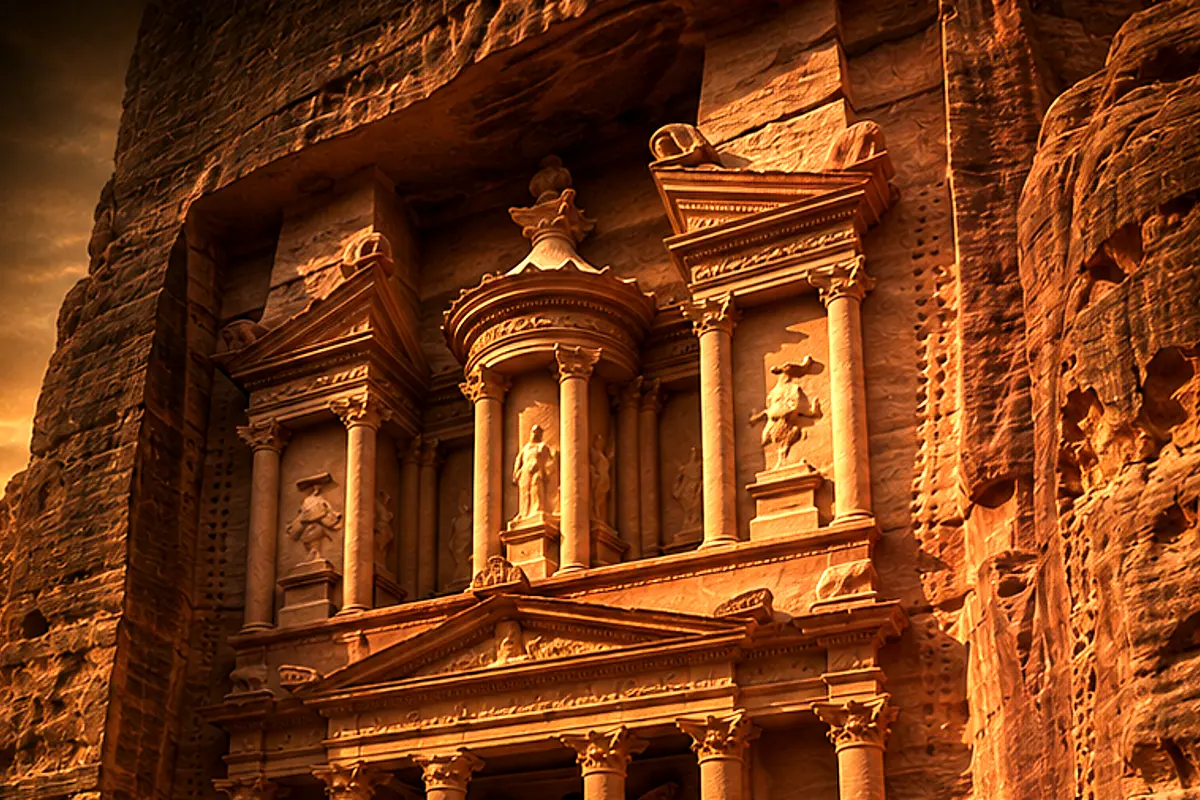
A familiar image sparks curiosity
For many people, Petra first brings to mind a façade carved into rock. Repeatedly shown in films and travel photographs, Al-Khazneh can come to stand for an entire city. Understanding a settlement also means looking around its best-known monument.
Into the city
Petra’s interest goes beyond its rock-cut architecture. Its natural setting, relationship with water and transport connections are parts of the same story. Asking why a building stands here, as well as how it looks, changes the direction of a visit.
Understanding a city begins by looking beyond its most photographed building.
Between cinema and archaeology
Archaeologist’s Chronicles uses a familiar film image as a starting point for curiosity. Yet the setting of a film and the history of an archaeological site require separate readings. Cinema creates a narrative world; archaeological interpretation rests on context and evidence.
Next stop: Tanis
After Petra, the series travels to Tanis. This time we ask how a powerful cinematic image can overshadow a real archaeological site. To listen to the city itself, we first need to step back from the story we think we know.