A 4,000-year bridge between Anatolia and the Aegean
Troy combines a long settlement sequence, a strategic position near the Dardanelles and the Homeric tradition, making it a key meeting point between archaeology and cultural memory.
✓The institutional relationship is verified against official project and institution pages.
01
Evidence at a glance
01
UNESCO inscription in 1998
02
4,000 years of urban history
03
8,000 years of settlement in the region
04
Modern excavation began in 1870
02
Read the site layer by layer
Sources for this dossier are listed together in the bibliography below. Individual claims are marked at section level only when a direct source mapping has been verified.
01
Settlement layers
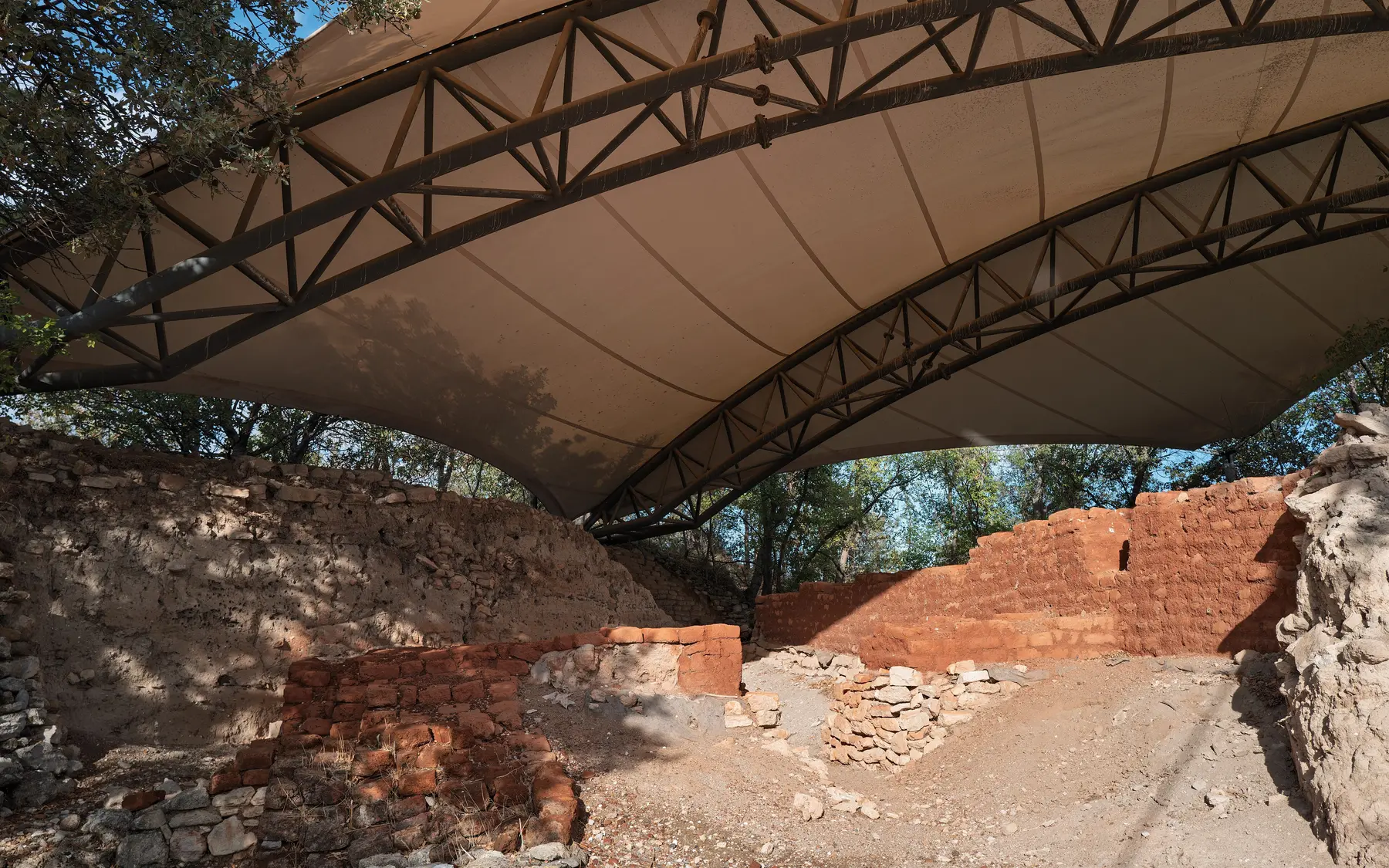
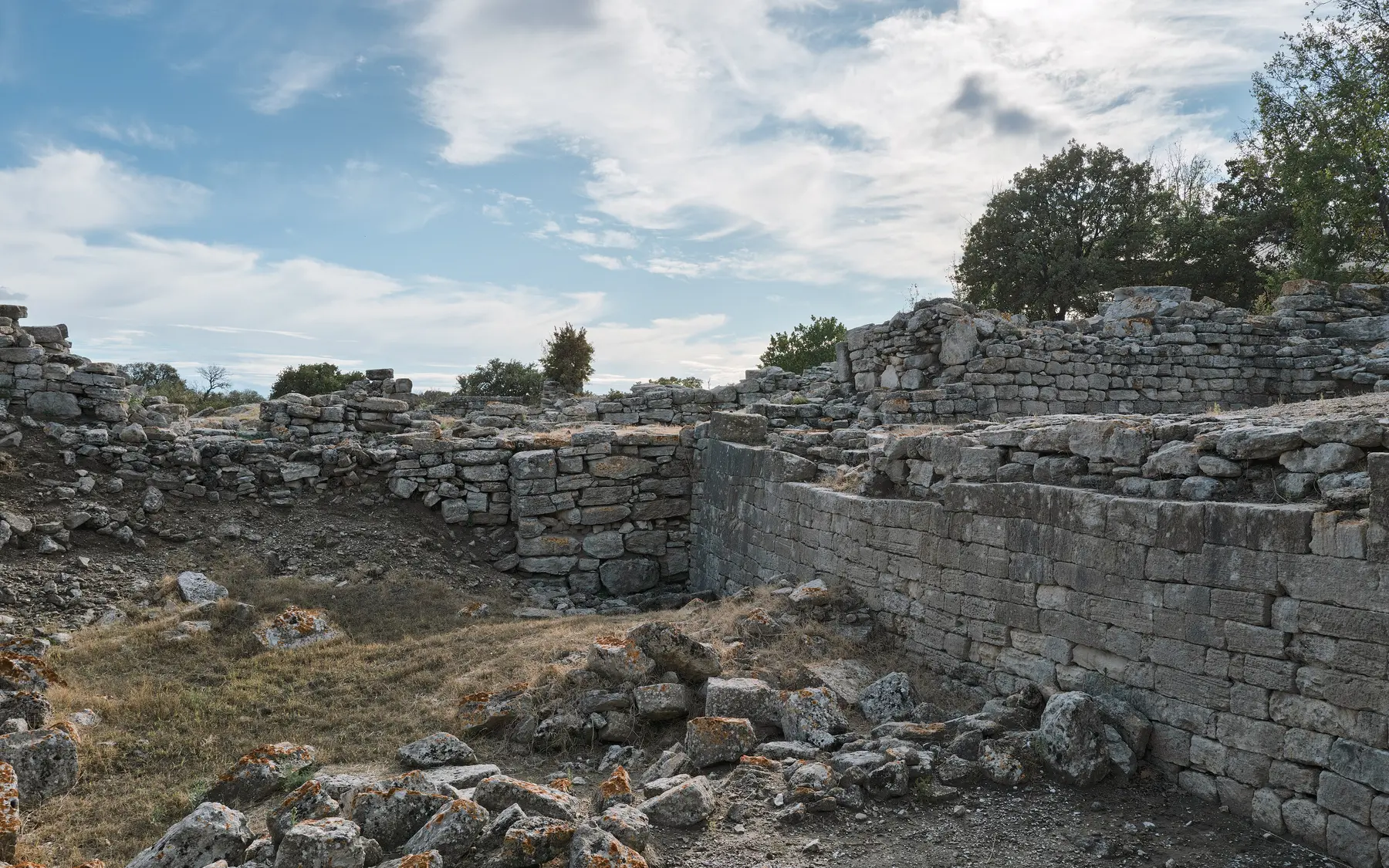
Successive settlements from Troy I to Roman Ilion show changing walls, gates, houses and public buildings. The mound contains many rebuilt cities, not one single Troy.
01
Megaron remains and protective canopy at Troy, Hisarlık.Captured: 2025Photo: Giorgio GaleottiWikimedia Commons ↗CC BY-SA 4.0 ↗Cropped for web
02
Straits and trade
Its position connected Anatolia, the Aegean, Balkans and Black Sea through migration, raw materials, seaborne trade and knowledge exchange.
02
Stone walls from Troy's superimposed settlement phases at Hisarlık.Captured: 2025Photo: Giorgio GaleottiWikimedia Commons ↗CC BY-SA 4.0 ↗Cropped for web
03
Homer and archaeology
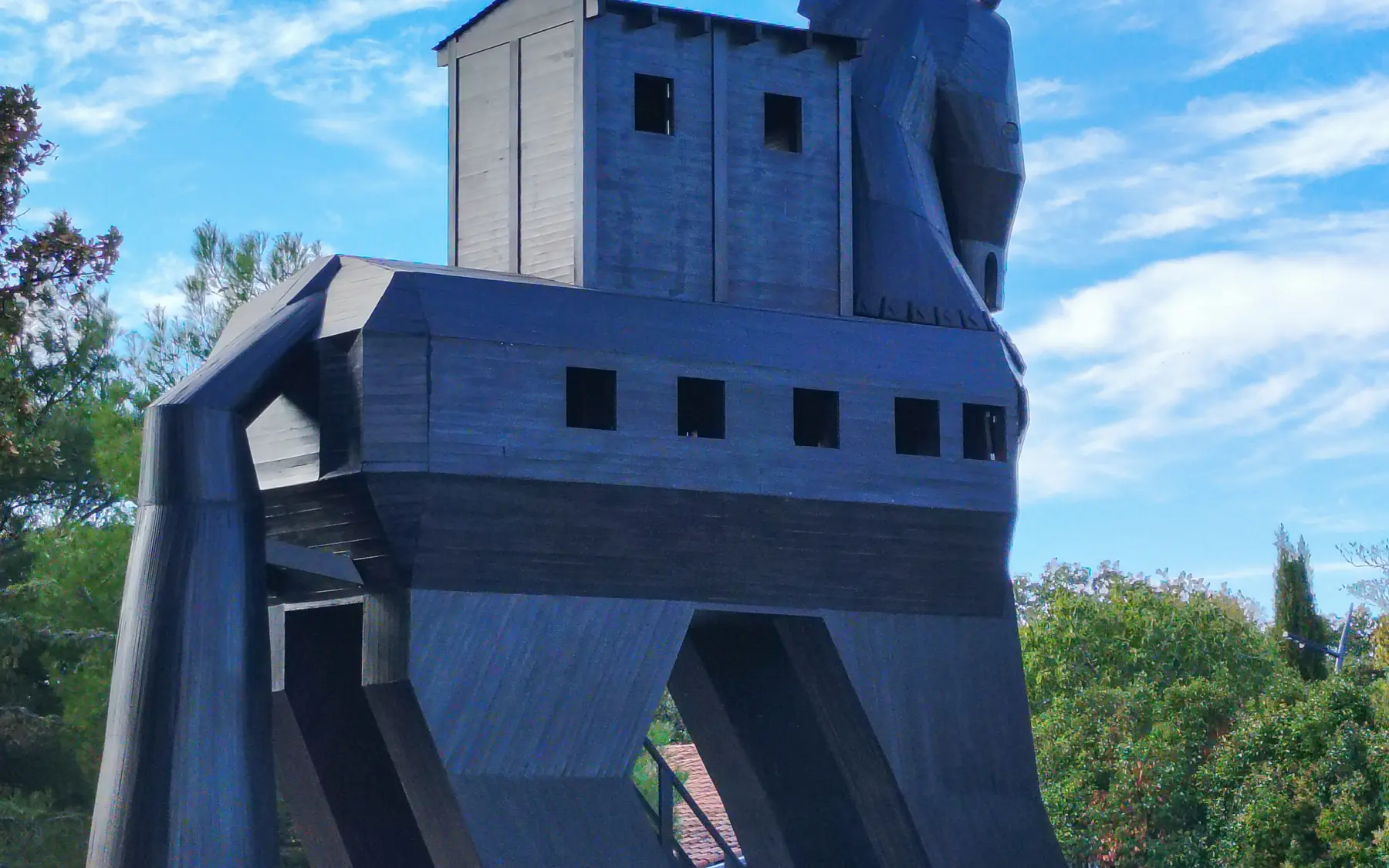
The Iliad made Troy globally famous. Archaeology does not simply prove the epic; it tests the Late Bronze Age city, destruction horizons and regional relations through material evidence.
03
The modern wooden horse interpretation at Troy, a contemporary representation of the Homeric story.Captured: 2025Photo: Giorgio GaleottiWikimedia Commons ↗CC BY-SA 4.0 ↗Cropped for web
04
History of excavation
Schliemann publicised the site in 1870 but damaged deposits. Dörpfeld, Blegen and modern teams rebuilt the sequence with increasingly careful stratigraphy, documentation and conservation.
04
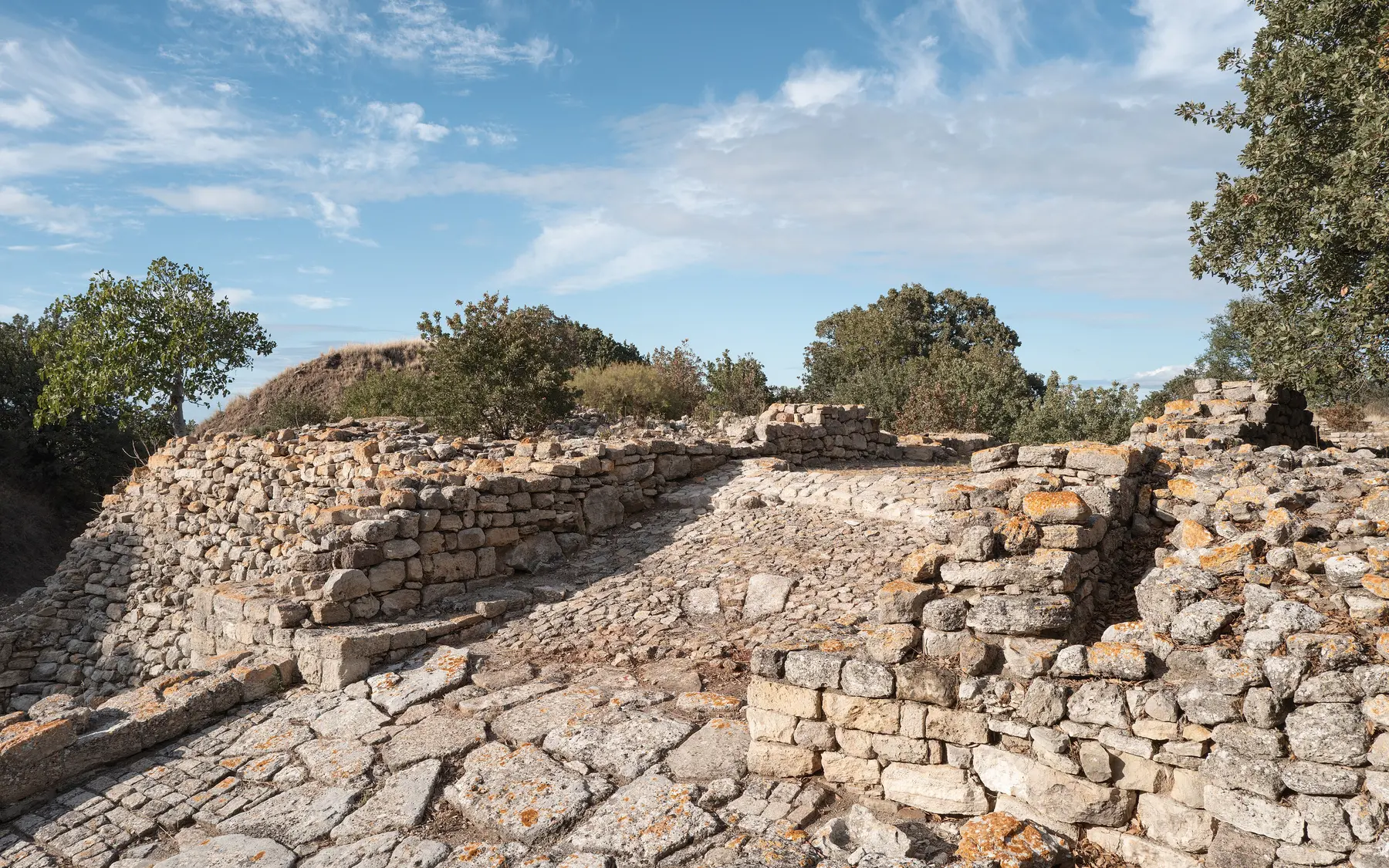
Troy's stone-paved ramp and the architectural layers around it.Captured: 2025Photo: Giorgio GaleottiWikimedia Commons ↗CC BY-SA 4.0 ↗Cropped for web
05
Protection and landscape
The World Heritage property includes the citadel, lower town and historic setting, requiring research, conservation and visitor management to work together.
05
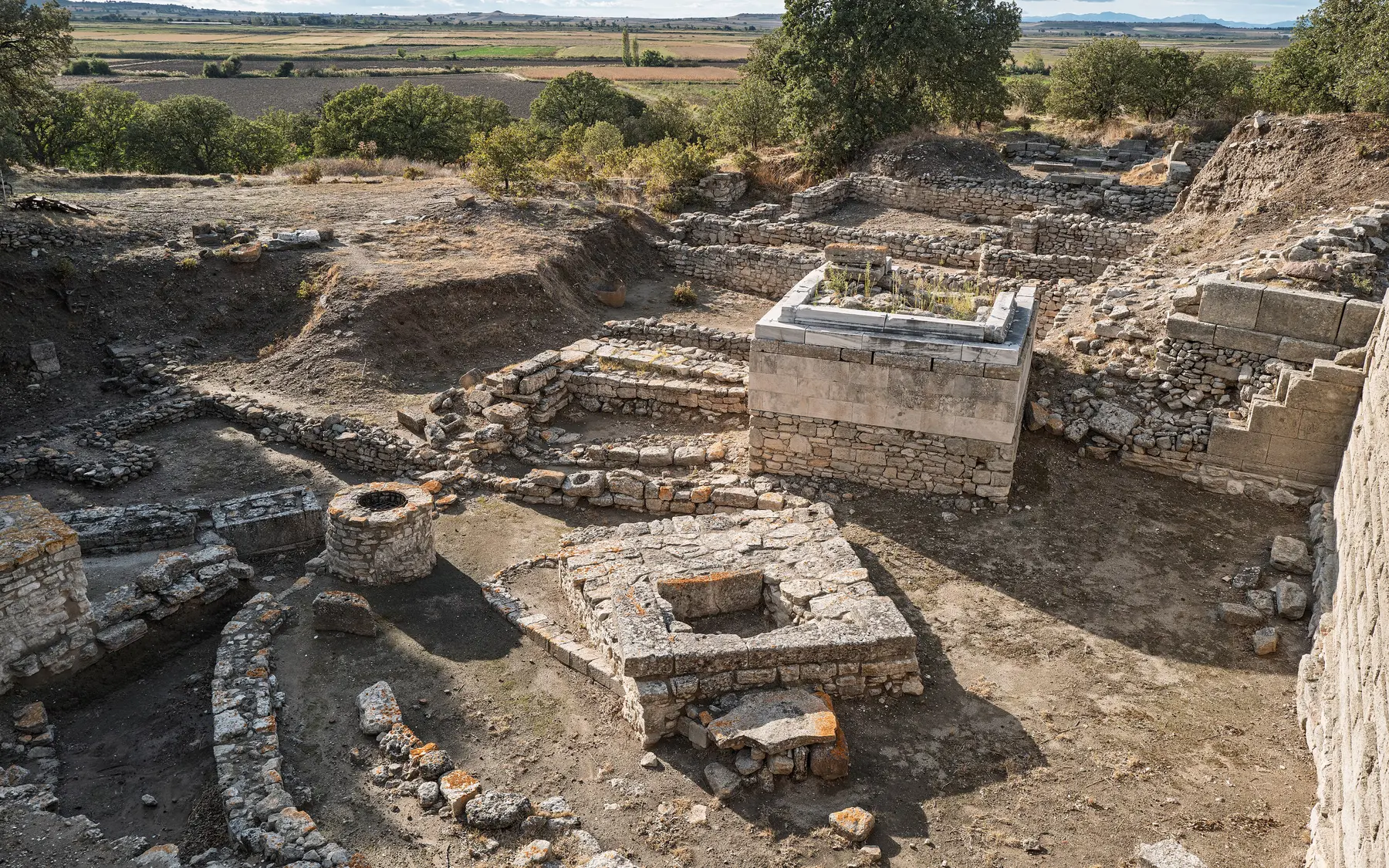
The sanctuary at Troy within its archaeological landscape.Captured: 2025Photo: Giorgio GaleottiWikimedia Commons ↗CC BY-SA 4.0 ↗Cropped for web
Through an Archaeologist's Eye
What should you notice in the field?
◎
What deserves attention on site?
Use changes in wall alignment, technique and elevation to separate settlement phases.
≋
How should this layer be read?
Troy's numbered phases describe successive settlement systems, not the date of one building.
△
What is the common misreading?
Equating Homer directly with an excavated event confuses archaeological evidence with literary memory.
These boxes do not claim personal discoveries. They are field-reading questions grounded in published archaeological context. Verifiable original observations by Ersin İğde are added separately and explicitly labelled.
Field mode
Prepare the file before your visit
Save the page for offline use, open the coordinates, use the checklist and keep personal notes only on this device.