A regional programme studying Neolithic transformation
Stone Hills is not one ancient city. It brings Göbeklitepe, Karahantepe, Sayburç and other Neolithic settlements into a regional programme studying different paths from mobile lifeways toward settlement.
✓The institutional relationship is verified against official project and institution pages.
01
Evidence at a glance
01
Multiple Neolithic settlements around Şanlıurfa
02
Around 12,000 years old
03
Monumental and domestic spaces studied together
04
Göbeklitepe is World Heritage
02
Read the site layer by layer
01
A region, not one site
The programme compares Göbeklitepe, Karahantepe, Sayburç, Sefertepe and other centres, replacing a single 'first temple' story with relationships among settlements.
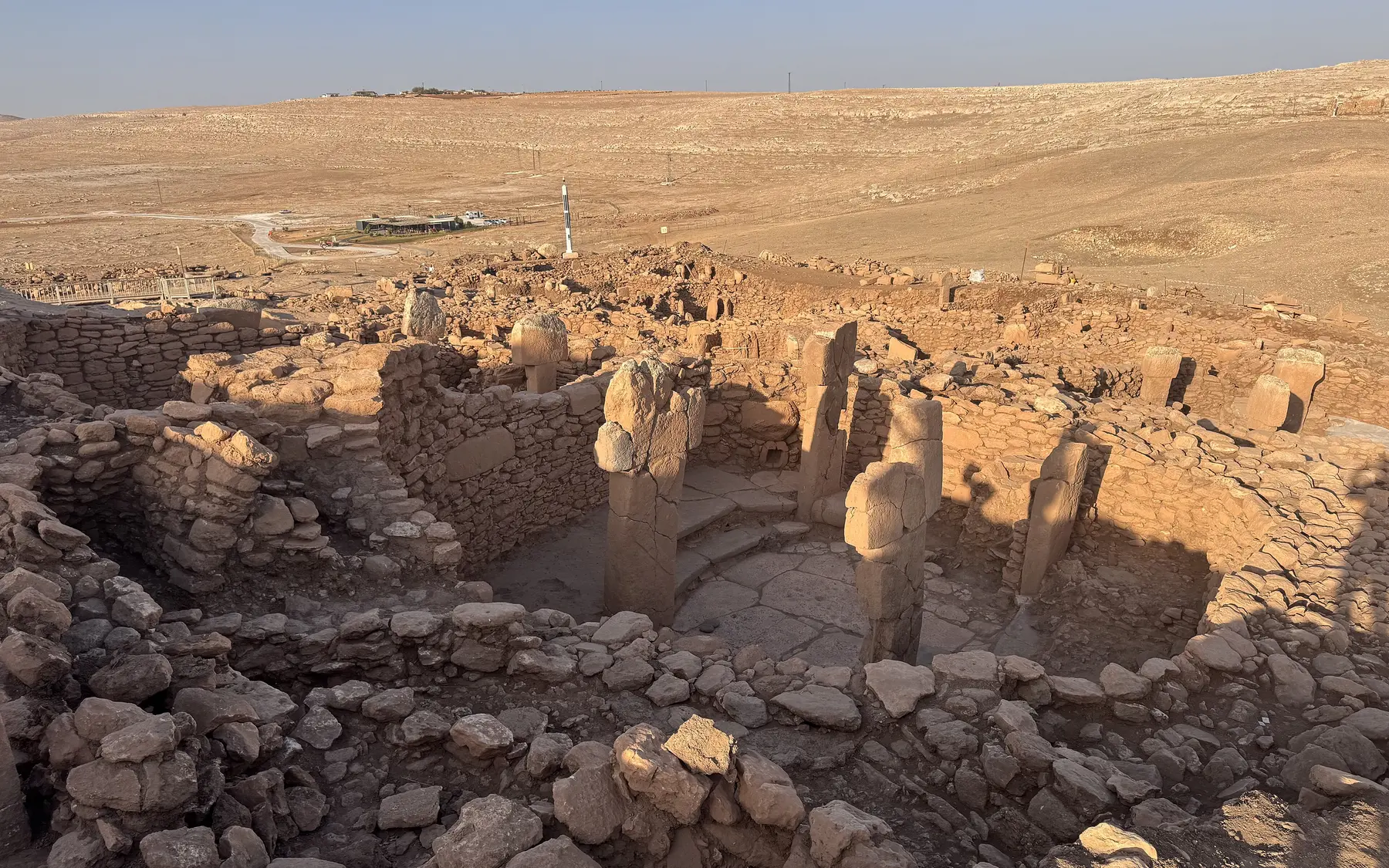
Overview of the excavated Neolithic structures at Karahantepe.Captured: 2025Photo: CampelsWikimedia Commons ↗CC0 1.0 ↗Cropped for web
02
Settlement and social organisation
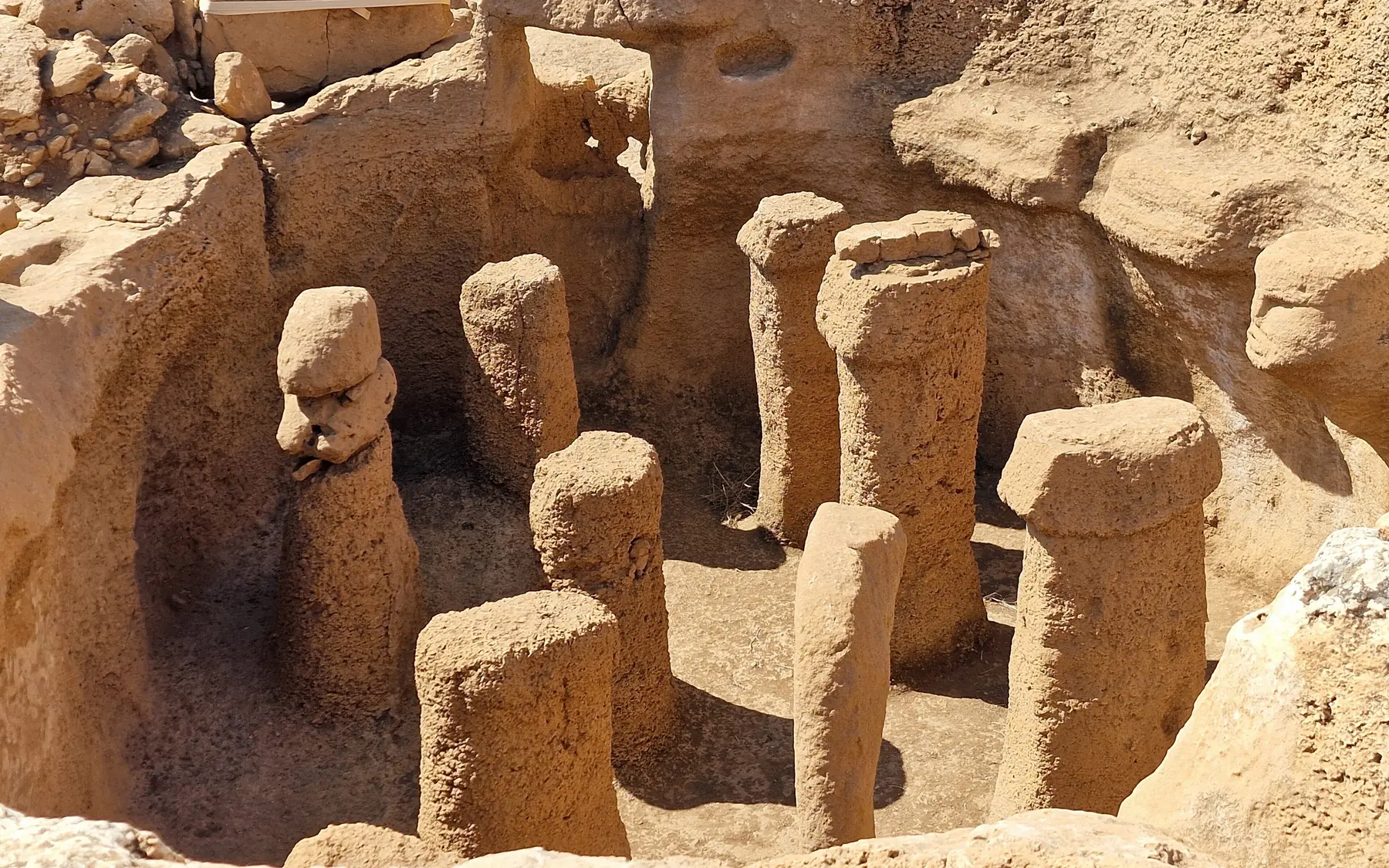
Round and rectangular buildings, communal spaces, storage and production show that the move toward settled life was not a single event. Shared labour and specialisation are key questions.
Bedrock-cut pillars and carved human head in Structure AB at Karahantepe.Captured: 2025Photo: tobeytravelsWikimedia Commons ↗CC BY-SA 4.0 ↗Cropped for web
03
T-shaped pillars and images
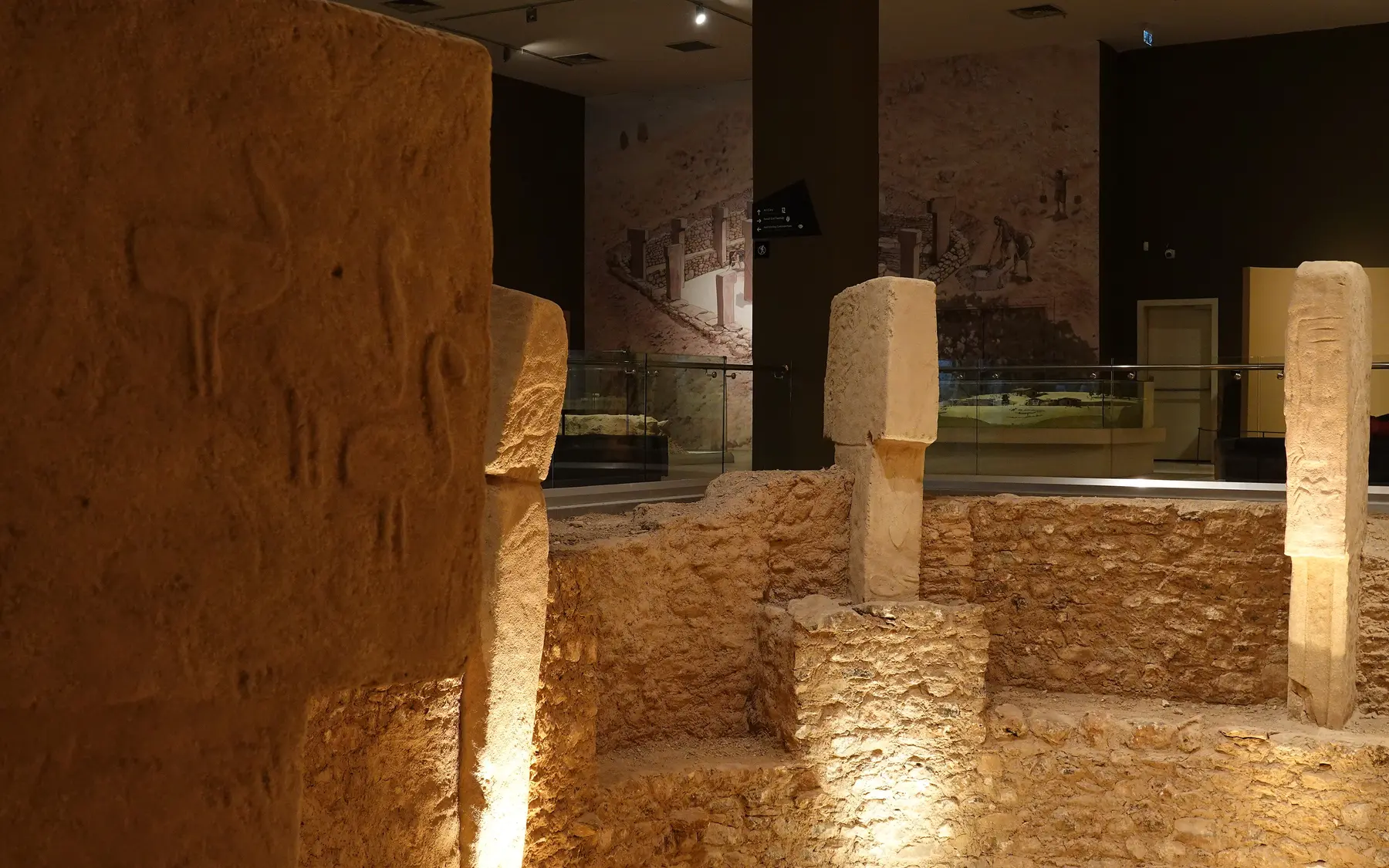
Anthropomorphic pillars, animal reliefs and sculpture are evidence for identity, memory, ritual and relationships with nature—not merely isolated artworks.
T-shaped pillars from Göbeklitepe displayed in Şanlıurfa Archaeological Museum.Captured: 2025Photo: Marco RestanoWikimedia Commons ↗CC BY-SA 4.0 ↗Cropped for web
04
Food and production
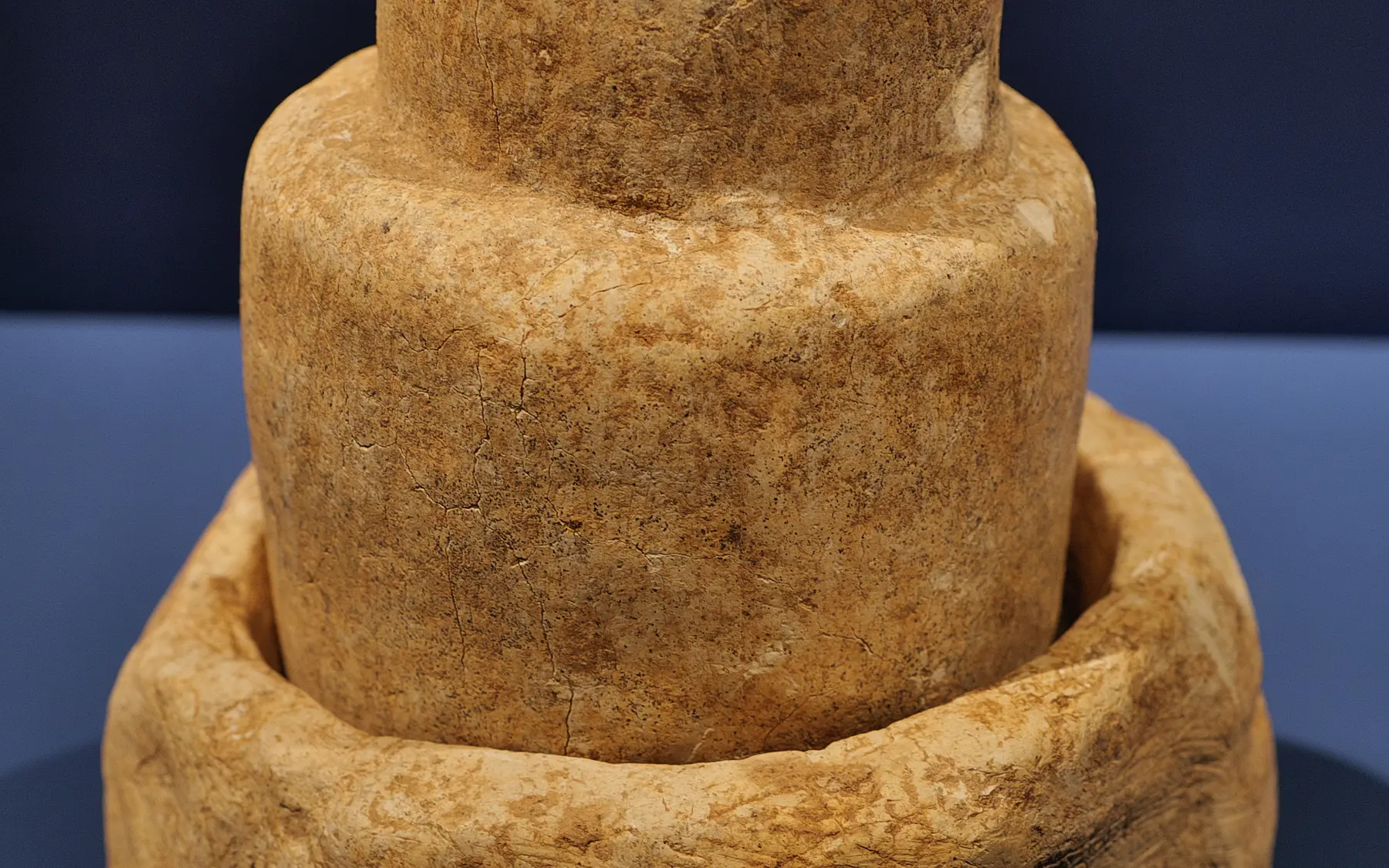
Animal bone, plant remains, grinding stones and spatial patterns point to a complex transition in which hunting, plant processing and early production overlapped.
Limestone mortar and pestle from Nevalı Çori, a regional comparison for Neolithic Şanlıurfa.Captured: 2026Photo: BautschWikimedia Commons ↗CC0 1.0 ↗Cropped for web
05
Protection and accurate description
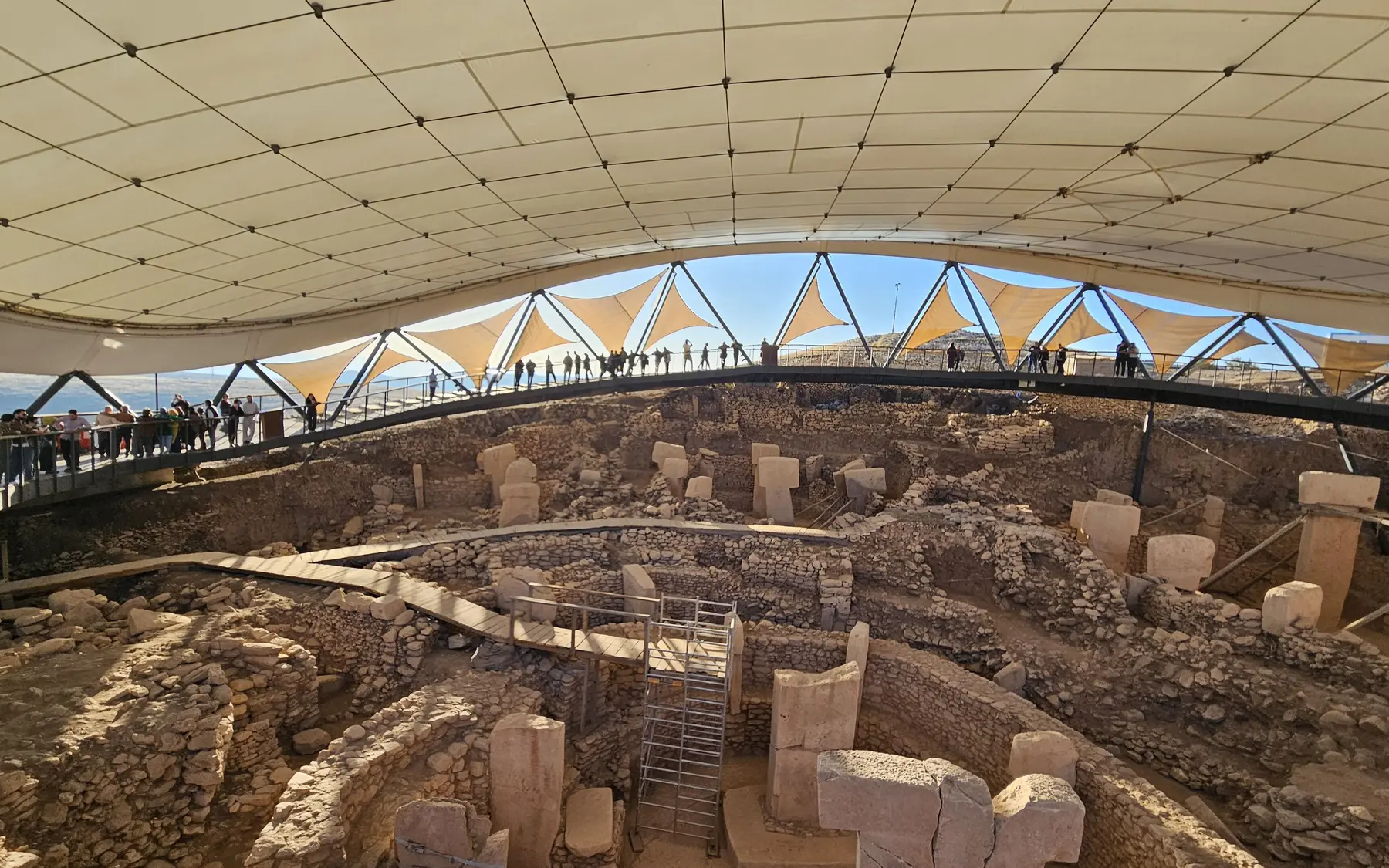
The entire programme is not a UNESCO property; that status belongs to Göbeklitepe. It is in Şanlıurfa and is not a single 'ancient city'.
The excavation area and visitor route beneath Göbeklitepe's protective roof.Captured: 2025Photo: PhilrockWikimedia Commons ↗CC BY-SA 4.0 ↗Cropped for web
Through an Archaeologist's Eye
What should you notice in the field?
◎
What deserves attention on site?
Read communal buildings against domestic spaces and keep pillars within their spatial context.
≋
How should this layer be read?
The sequence of round and rectilinear plans shows that sedentism was not a single step.
△
What is the common misreading?
Calling every Stone Hills settlement a single 'temple civilisation' obscures domestic and economic evidence.
These boxes do not claim personal discoveries. They are field-reading questions grounded in published archaeological context. Verifiable original observations by Ersin İğde are added separately and explicitly labelled.
Field mode
Prepare the file before your visit
Save the page for offline use, open the coordinates, use the checklist and keep personal notes only on this device.
Notes are not sent to the server; they stay in this browser's local storage.
✦
Why does it matter?
Stone Hills
Stone Hills strengthens the view that civilisation emerged through long experiments among different communities, not at one centre in one sudden moment.
Weekly currency system
Programme scope check
Official project sources were used to reconfirm that Stone Hills is not one site and UNESCO status applies only to Göbeklitepe.



 Stone HillsOpen official source Scientific leadRepublic of Türkiye Ministry of Culture and TourismOpen official source