
Back to the Info Corner entrance

Info Corner · Archaeology

Archaeology

Explore selected excavation sites in Türkiye through detailed files covering chronology, field methods, finds, daily life and conservation.

5
Site files
4
Chronological filters
3
Publishing languages
Quick SwitchExport GuideA practical market-to-delivery roadmap
Prepared by Ersin İğdeLast editorial review: 24 July 2026Author and methodology

Read each place through chronology, fieldwork, trade networks, belief, daily life and conservation—not simply as a monument.

5 research files
Filter excavation sites5 / 5
Filter by period

Geographic reading

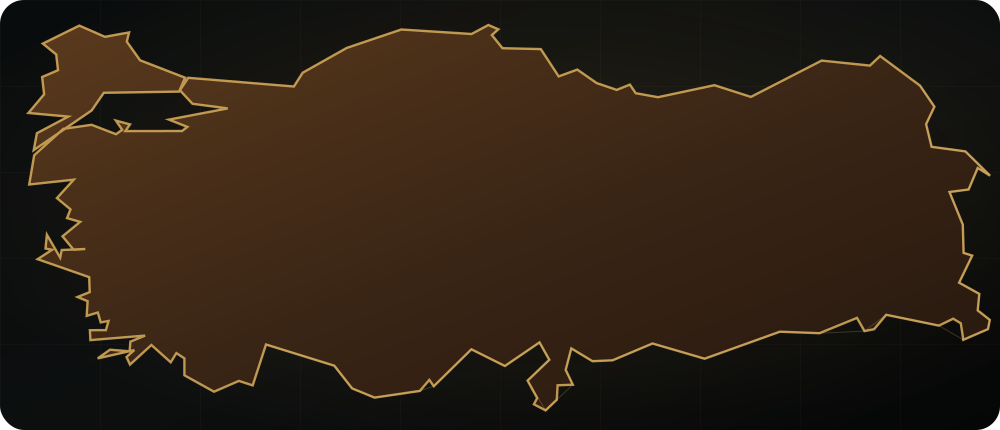
See every site in its correct context

Compare five research files using verified WGS84 reference points. Selecting a site updates the map, chronology and field dossier together.

The base map is simplified from Natural Earth country geometry. Markers use the WGS84 coordinate system.

The two-storey façade of the Library of Celsus at Ephesus.
The two-storey façade of the Library of Celsus at Ephesus.Captured: 2023Photo: Warren LeMayWikimedia CommonsCC BY-SA 2.0Cropped for web

Selected research file

Ephesus

Harbour, pilgrimage and imperial metropolis

8-minute read

Around the former Kaystros estuary, Ephesus preserves shifting harbours, Roman monuments, the cult of Artemis and early Christian heritage within one long settlement system.

Site Profile
Selçuk, İzmir
Reference location
37.939° N · 27.341° E
Chronology
Neolithic–Ottoman
Protection / research
UNESCO World Heritage · 2015

Research identity

Excavation and scientific lead

The Austrian excavations at Ephesos are conducted by the OeAI at the OeAW; the current excavation director is Martin Steskal.

The institutional relationship is verified against official project and institution pages.

02

Comparative reading

Examine excavation sites side by side

Select two or three sites and compare chronology, settlement, architecture, economy, finds, excavation method and conservation.

2/3 · Up to 3 sites
01

Bathonea

Ancient harbour and multi-layered settlement
Location
Lake Küçükçekmece, Istanbul
Chronology
Epipalaeolithic–Ottoman
Settlement type
Harbour and lagoon settlement
Architecture
Harbour works, water structures, workshops and basilical buildings
Economy
Coastal mobility, production, food processing and regional trade
Important finds
Stone finds, ceramics, and evidence for production and water systems
Excavation method
Basin-scale survey, stratigraphic excavation and environmental data
Conservation status
Active excavation; lagoon conditions and urban pressure are monitored together
02

Troy

A 4,000-year bridge between Anatolia and the Aegean
Location
Hisarlık, Çanakkale
Chronology
Bronze Age–Roman
Settlement type
Fortified tell settlement
Architecture
Superimposed walls, gates, megarons, ramp and sanctuaries
Economy
Straits traffic, Aegean–Anatolian exchange and regional production
Important finds
Bronze Age architectural phases, ceramics and defence systems
Excavation method
Microstratigraphy, building phases, geophysics and conservation-led excavation
Conservation status
UNESCO property; visitors, legacy excavation damage and conservation are managed together

03

Chronological context

Not one line, but a layered chronology

Compare each site's strongest research phases. The period filter narrows the map at the same time.

  1. 01
    10th–7th millennia BCEEarly experiments in settled life
  2. 02
    3rd–2nd millennia BCEBronze Age cities and networks
  3. 03
    4th–1st centuries BCEHellenistic kingdoms and urbanism
  4. 04
    1st–7th centuries CERoman and Late Antique change
  5. 05
    7th–19th centuries CEByzantine and Ottoman layers

04

Finds Atlas · First records

Keep every object in context

Each record connects an object or architectural feature to material, date, find context, current location, evidence source and image licence.

Where an inventory number or precise layer cannot be verified in open sources, the record says so explicitly.

05

Archaeology database · Version 1.0

Five files in one extensible data model

Province, coordinates, period, site type, research institution, excavation/conservation status, UNESCO record, update date and official source share one record.

Download JSON datasetJSON · UTF-8 · 5 records
FileProvince / regionCoordinatesPeriodSite typeInstitutionStatusUNESCOLast updatedOfficial source
BathoneaIstanbul · Marmara41.021° N · 28.718° EEpipalaeolithic–OttomanSettlement / tellScientific direction by Kocaeli UniversityActive excavationNot a UNESCO World Heritage propertyOfficial source
TroyÇanakkale · North Aegean39.958° N · 26.239° EBronze Age–RomanSettlement / tellMinistry of Culture and Tourism / Troy MuseumUNESCO World Heritage · 1998World Heritage · 1998Official source
Pergamonİzmir · Aegean39.133° N · 27.185° EHellenistic–OttomanCity / cultural landscapeGerman Archaeological Institute / Ministry of Culture and TourismUNESCO World Heritage · 2014World Heritage · 2014Official source
Ephesusİzmir · Aegean37.939° N · 27.341° ENeolithic–OttomanCity / cultural landscapeAustrian Archaeological Institute / Ministry of Culture and TourismUNESCO World Heritage · 2015World Heritage · 2015Official source
Stone HillsŞanlıurfa · Southeastern AnatoliaŞanlıurfa bölgesel odakc. 9600–8000 BCERegional research networkStone Hills Project / Ministry of Culture and TourismMulti-site research programmeGöbeklitepe World Heritage · 2018; not the whole programmeOfficial source

04

Research dossier

Evidence at a glance

01

UNESCO inscription in 2015

02

History reaches the 7th millennium BCE

03

Capital of Roman Asia

04

Artemis and Christian pilgrimage traditions

05

Field note

A layer-by-layer reading

  1. 01

    Changing coast and harbours

    As river sediment pushed the coast west, settlements and harbours moved. The sea channel and harbour basin make Ephesus an exceptional Roman port shaped by environmental change.

    Arcadian Street at Ephesus, running towards the ancient harbour landscape.
    Arcadian Street at Ephesus, running towards the ancient harbour landscape.Captured: 2023Photo: Warren LeMayWikimedia CommonsCC BY-SA 2.0Cropped for web
  2. 02

    Roman metropolis

    The Library of Celsus, Great Theatre, Terrace Houses, agoras and processional streets reveal administration, commerce, education and elite domestic life.

    The two-storey façade of the Library of Celsus at Ephesus.
    The two-storey façade of the Library of Celsus at Ephesus.Captured: 2023Photo: Warren LeMayWikimedia CommonsCC BY-SA 2.0Cropped for web
  3. 03

    Artemis and pilgrimage

    The Artemis cult, rooted in Anatolian mother-goddess traditions, created Mediterranean-wide pilgrimage and economic networks around one of the Seven Wonders.

    Stone foundations and wall remains of the Ephesian Artemision in 2026.
    Stone foundations and wall remains of the Ephesian Artemision in 2026.Captured: 2026Photo: Satırdan KahramanWikimedia CommonsCC BY-SA 4.0Cropped for web
  4. 04

    Early Christianity

    The Church of Mary, Basilica of St John and councils of 431 and 449 demonstrate Ephesus's decisive role in Christian history; pilgrimage survived the shrinking city.

    Preserved wall-painting detail in the Basilica of St John at Ayasuluk.
    Preserved wall-painting detail in the Basilica of St John at Ayasuluk.Captured: 2024Photo: Satırdan KahramanWikimedia CommonsCC BY-SA 4.0Cropped for web
  5. 05

    Excavation and conservation

    Around 150 years of work have documented monuments, houses, inscriptions, water systems and the changing harbour landscape while balancing tourism with fragile remains.

    Monumental remains and visitor movement across the Ephesus archaeological site.
    Monumental remains and visitor movement across the Ephesus archaeological site.Captured: 2023Photo: Warren LeMayWikimedia CommonsCC BY-SA 2.0Cropped for web

Sources and further reading

Ephesus

The editorial text is checked against official institutions, excavation teams and World Heritage sources.

Develop an archaeology or heritage project

Turn an excavation, museum, cultural route or shared-publication idea into a sourced editorial project.

Discuss a Partnership